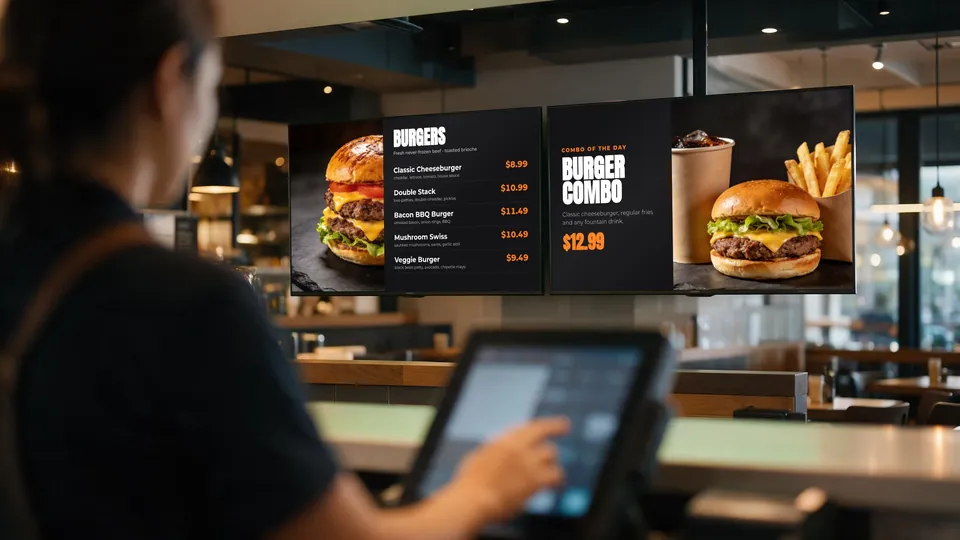
When it comes to menu boards, restaurant and cafe owners are often faced with a dilemma: should they use static images or video content? The answer depends on several factors, including the type of establishment, target audience, and overall brand identity. In this article, we'll delve into the benefits and drawbacks of each approach to help you make an informed decision.
Static Images: A Classic Choice
Static images are a tried-and-true approach to menu boards. They are easy to create, update, and maintain, making them a popular choice for many restaurants and cafes. Here are some benefits of using static images:
- Easy to create and update: Static images can be designed using any graphic design software, and updates can be made quickly and easily.
- Cost-effective: Static images require minimal investment in equipment and training.
- Simple to maintain: Static images are less prone to technical issues and require minimal IT support.
However, static images also have some drawbacks:
- Static: As the name suggests, static images are, well, static. They don't change or move, which can make them less engaging for customers.
- Limited interactivity: Static images don't offer much interactivity, which can make them feel less dynamic and less appealing to customers.
Video: A More Engaging Option
Video content is a more modern and engaging approach to menu boards. Here are some benefits of using video:
- More engaging: Videos are more likely to grab customers' attention and keep them engaged for longer.
- Interactive: Videos can include interactive elements, such as buttons, links, and animations, which can make the experience more enjoyable for customers.
- Dynamic: Videos can be updated quickly and easily, making them a great way to showcase new menu items or promotions.
However, video content also has some drawbacks:
- More complex to create: Videos require more equipment and expertise to create, which can be a barrier for some restaurants and cafes.
- More resource-intensive: Videos require more bandwidth and processing power, which can be a concern for establishments with limited IT resources.
KwickSIGN to the Rescue
At KwickSIGN, we understand the importance of choosing the right approach to menu boards. That's why we've designed our digital menu boards to be flexible and adaptable to your needs. With KwickSIGN, you can create stunning static images or engaging videos, and update them with ease using our intuitive software.
Our digital menu boards are designed to be cost-effective, easy to maintain, and highly engaging. With features like auto-updating menus and prices, auto-86 for sold-out items, video-wall tiling, and remote updates with no USB sticks, you can focus on what matters most – serving your customers and growing your business.
So, what's the best approach for your restaurant or cafe? The answer is simple: it depends on your target audience, brand identity, and overall goals. If you want to create a classic, easy-to-maintain menu board, static images might be the way to go. But if you want to create a more engaging, interactive experience, video content could be the perfect choice. With KwickSIGN, you can have it all – flexibility, adaptability, and the ability to create stunning menu boards that will drive sales and customer engagement.
About KwickSIGN: KwickSIGN is the digital menu board solution built into KwickPOS. Control up to 99 Smart TVs with automated scheduling, real-time inventory sync, and instant price updates.
Request a Quote